 Back to News & Articles

As global supply chains continue to adjust to geopolitical shifts, the Middle East is facing a period of heightened operational complexity marked by route disruptions, congestion at key gateways, and increased variability in transit times.
Against this backdrop, logistics providers and shippers alike are reassessing network design, hub utilization, and contingency planning.
In this Q&A, Sachin Vijan, Regional Managing Director – Indian Subcontinent, Middle East & Egypt, shares his perspective on the evolving situation, the importance of operational flexibility, and how Vanguard supports customers in navigating continued uncertainty across the region.
Q: How would you describe the situation in the Middle East from a logistics lens?
Sachin Vijan:
The situation remains dynamic with ongoing disruptions influencing key trade lanes, transit times and routing decisions. While uncertainty persists, supply chains are steadily adapting through more flexible planning and diversified routing strategies to maintain continuity and reliability.
Q: What are the operational challenges that result from this geopolitical situation?
Sachin Vijan:
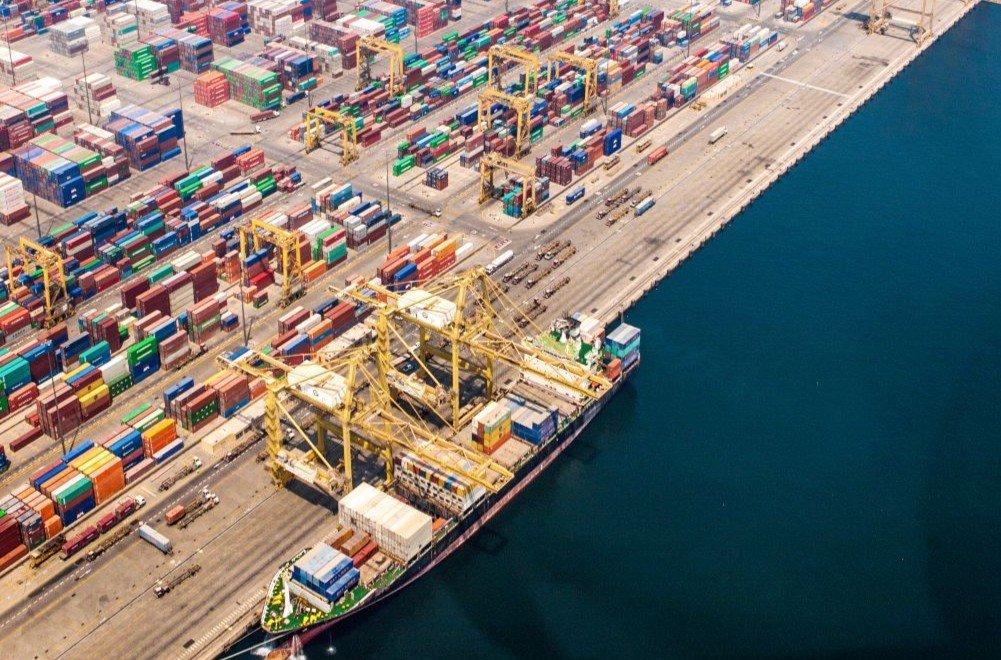
Operations are currently impacted by extended transit times, changing carrier schedules, and cost volatility. Reduced predictability remains the primary challenge, with ETA variability driven by severe congestion at Khor Fakkan, Fujairah, and Sohar. As a result, closer coordination across origins, hubs, and destinations is essential to maintain efficient cargo flows.
Q: How do you address uncertainty?
Sachin Vijan:
Our approach is anchored in agility, visibility, and strong coordination. We remain highly proactive, continuously adjusting routing and planning in response to evolving market conditions, while leveraging our global network to offer customers dependable alternatives.
Real-time monitoring and close communication are critical to navigating uncertainty, and keeping customers informed through regular, transparent updates remains a top priority. By staying closely connected to our customers, we are able to support informed decision-making and maintain supply chain continuity.
Q: What is the role of regional hubs?
Sachin Vijan:
Regional hubs play a critical role in maintaining flexibility and control. During this disruption, we have leveraged Nhava Sheva as a key hub for consolidation, routing cargo via Khor Fakkan and Fujairah into Jebel Ali. This approach allows us to maintain smoother cargo flows, even in unpredictable conditions. From Jebel Ali, our network enables efficient connectivity into key GCC markets, including Bahrain, Kuwait, Jordan, Qatar, Saudi Arabia, and Sohar.
Similarly, for exports, when required, Nhava Sheva serves as an effective hub for Jebel Ali-origin cargo, offering reliable connections to worldwide destinations.
Q: What is your advice to customers and logistics partners?
Sachin Vijan:
Strategic planning, flexibility, and supply chain diversification are essential in the current environment. Strong partnerships, proactive communication, and access to a resilient global network are essential to navigating ongoing uncertainty.
Overall, our focus remains on keeping supply chains steady, transparent and well-coordinated so there are fewer surprises along the way!