
 Back to News & Articles

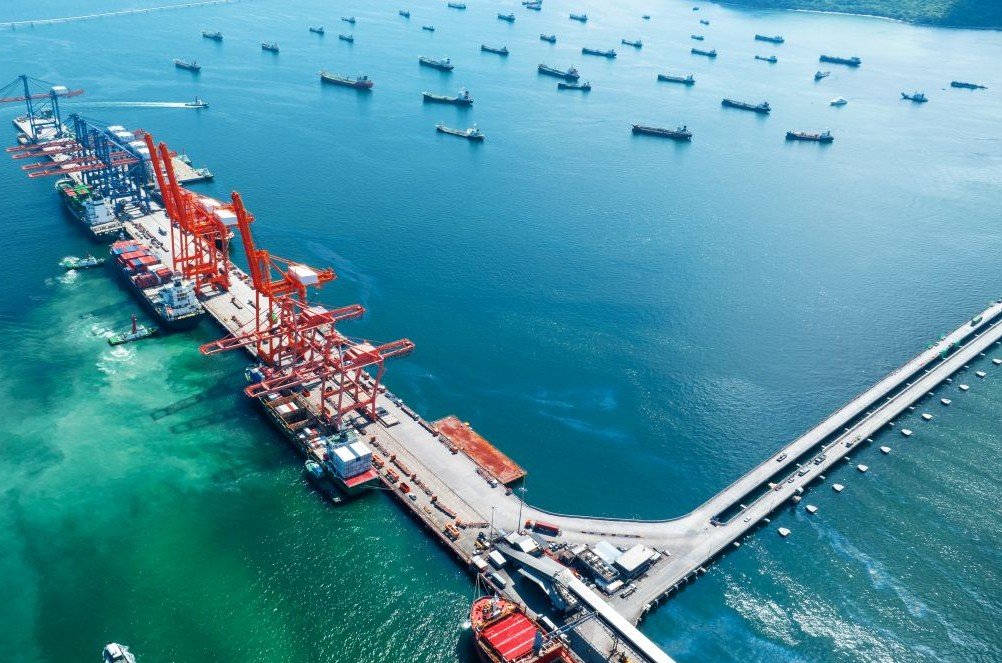
Global supply chains are increasingly exposed to disruption. Geopolitical tensions, port congestion, capacity shifts, and operational constraints can quickly impact planned routings and transit times. In this environment, the ability to adapt quickly and reroute cargo effectively has become critical particularly for Less-than-Container Load (LCL) shipments.
The priority is direct loading, but adaptability remains essential in today’s changing logistics environment.
An effective way of managing uncertainty is through the strategic use of regional hubs. When supported by strong coordination and local expertise, regional hubs can play a key role in maintaining cargo flow even when standard routes are no longer viable.
Why do regional hubs matter in LCL networks?
LCL shipping depends on consolidation, coordination, and timing. Disruptions at a single port or gateway can have a ripple effect across multiple shipments. Regional hubs provide an alternative by acting as flexible consolidation and redistribution points, allowing cargo to be rerouted without stopping the flow entirely.
ITF’s global freight transport model predicts that demand for freight transport will almost double in Southeast Asia by 2050. In an environment where demand is rising and geopolitical volatility is there, regional hubs become essential for resilience and continuity.
Rather than relying on fixed, linear routing structures, hub-based networks create optionality. This approach enables logistics providers to adjust planning based on changing conditions while preserving service continuity for customers.
Flexibility through alternate gateways
When primary gateways experience congestion or operational limitations, regional hubs serve as alternative entry and exit points. Vanguard Logistics leverages its own global network to deliver comprehensive end-to-end cargo movement and enhanced visibility for our clients.
The availability of alternate gateways reduces the risk of extended delays, rolled cargo, or storage congestion at a single port.
For example, in the Middle East, the use of consolidation hubs such as Nhava Sheva, combined with routing via Fujairah or Khor Fakkan into Jebel Ali, has allowed cargo to continue moving even when conditions are unpredictable. From these gateways, cargo can then be distributed efficiently to destinations across the GCC using established regional networks.
Strong coordination is as important as infrastructure
Regional hubs alone are not enough. Their effectiveness depends heavily on close coordination between origin, hub, and destination teams. Smooth handovers, timely documentation, and clear visibility are essential to ensure cargo moves as planned.
This operational coordination enables informed adjustments in real time; whether that means changing consolidation points, revising sailing schedules, or shifting inland distribution plans.
Regional expertise and local knowledge are key
Another key advantage of regional hubs is the ability to leverage local market expertise. Regional teams are often better positioned to understand port conditions, regulatory considerations, and inland connectivity challenges.
For example, at our regional hubs like Singapore, Antwerp, Nhava Sheva, and Jebel Ali, making use of local expertise helps to make faster routing decisions rooted in practical, on-the-ground experience.
In LCL environments, where timing, compliance, and handling standards are critical, regional expertise helps maintain service integrity even under strained conditions.
A practical approach to resilience
Disruption is no longer an exception; it is part of today’s reality. The use of regional hubs provides LCL networks with a practical, proven way to absorb shocks and adapt without compromising overall service reliability.
By combining flexible hub routing, strong coordination across regions, and local operational expertise, logistics providers can continue to support customers effectively by keeping cargo moving even amidst periods of uncertainty.